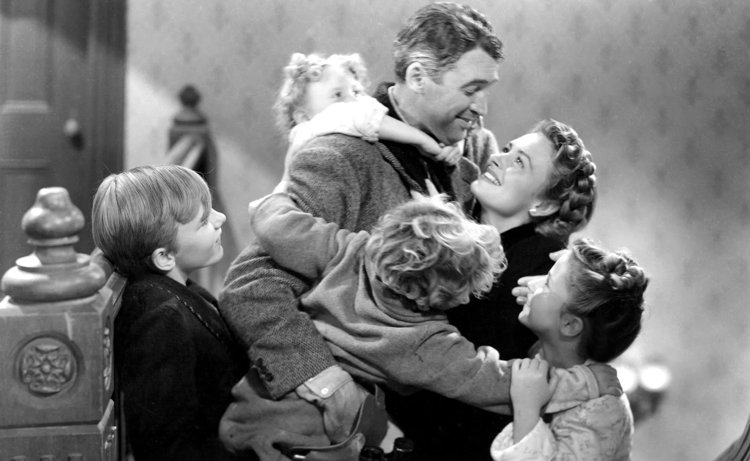
Today, Frank Capra’s ‘It’s a Wonderful Life’ (1946) is regarded in the United States as one of the warmest and most uplifting Christmas films, but its path to becoming a beloved classic was far from easy. Released in 1946, the film tells the story of George Bailey — a man who dreamed of one life but was forced to live a very different one, dedicating himself to the well-being of the residents of the small town of Bedford Falls.
The film opens at a moment when George, played by James Stewart, is on the brink of despair: a series of misfortunes shatters his plans, and a mistake made by his kind-hearted but absent-minded uncle threatens not only George’s own future, but the fate of the entire town. When the hero is ready to take his own life, he is visited by the angel Clarence — a character played by Henry Travers, who is hoping to earn his wings.
By showing George how bleak and joyless the world would be without him, Clarence helps him realize the true value of his own life. Despite the emotional power of the story, critics greeted the film coolly: many found it overly sentimental, and it failed at the box office. It seemed the film would quietly fade into history without much impact.

However, It’s a Wonderful Life soon gained an unusual and unexpected opponent — the FBI. During the early years of the hunt for “subversive ideas,” the agency actively searched for elements that could be linked to communist propaganda. Capra’s film attracted the attention of agents for precisely this reason. Paradoxically, they believed that a dangerous ideological subtext was hidden within the bright Christmas story.
FBI reports cited peculiar objections: agents disliked the “overly villainous” portrayal of the wealthy Mr. Potter, played by Lionel Barrymore. The powerful, greedy capitalist, set in opposition to the honest, community-minded banker George Bailey, struck the Bureau as a sign of communist criticism of the American financial system. George’s community bank was also interpreted as a suspiciously “left-wing” element. The accusations were so vague and contradictory that even the House Un-American Activities Committee declined to open a case against the film.
Read more: ‘The Santa Clause’: When a Christmas Fairy Tale Went Too Far
Over time, the situation changed dramatically. Thanks to repeated television broadcasts in the 1970s and 1980s, the film gained immense popularity and became a Christmas symbol for millions of American viewers. The warm story of how one person can change the lives of others found new strength and contemporary resonance. And the suspicions of “red propaganda” now seem more like a historical curiosity of the era.
Many years later, Frank Capra spoke of the film with special affection and pride, calling it “the greatest film I ever made.”