

An interesting fact about Santa Claus is that his appearance was originally inspired by the Dutch saints, Saint Nicholas and Sinterklaas.
The story dates back to the third century, and the time of a monk named Saint Nicholas, though some sources claim he was a bishop. Nicholas was born around 280 AD in Patara, in what is now modern-day Turkey. Legend has it that he possessed a generous spirit and traveled throughout the countryside, helping the poor and the sick.
Nicholas’s parents were wealthy and left him a large portion of their fortune after their death. Nicholas gave away his inheritance to those less fortunate and lived a life of humility.
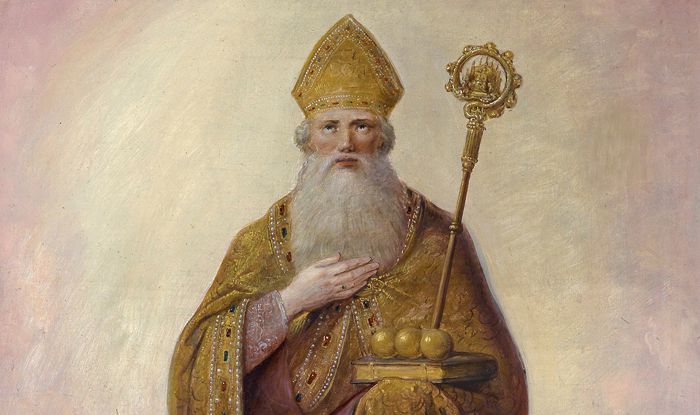
By the time of the Renaissance, Nicholas was the most popular saint in Europe. He was canonized by Pope Eugene IV on June 5, 1446, and became known as the patron saint of children and sailors. December 6th marks the anniversary of Nicholas’s death. When it was celebrated in the Netherlands, the saint “Sinterklaas” would distribute gifts to everyone.
Waves of European immigrants brought the tradition of celebrating Saint Nicholas Day to America. Dutch Americans added it to Christmas to emphasize their Dutch heritage, giving Americans “Santa Claus!” By the end of the 18th century, Saint Nicholas had been recognized by American culture.
It is claimed that the name Santa Claus evolved from the Dutch Sinter Klaas, a shortened form of Sint Nicolaas, which translates to Saint Nicholas. Gift-giving is a custom that originated from the Saint’s generosity, and it has been part of Christmas tradition since the early 19th century.
Was Santa Claus Always Dressed in Red?
A common myth is that Santa Claus was green before Coca-Cola used the color red for its marketing campaigns in the early 1900s. While this is true to some extent, Santa was depicted in red as early as the 1870s by the American cartoonist Thomas Nast.
In 1931, the Coca-Cola Company commissioned artist Haddon Sundblom to paint Santa Claus for the company’s Christmas advertisements. Inspired by the 1823 poem “A Visit from St. Nicholas,” the artist created a warm, cheerful figure with rosy cheeks, a large belly, small spectacles, and a beaming smile. So yes, the modern depiction of this magical figure is something people can thank Coca-Cola for.