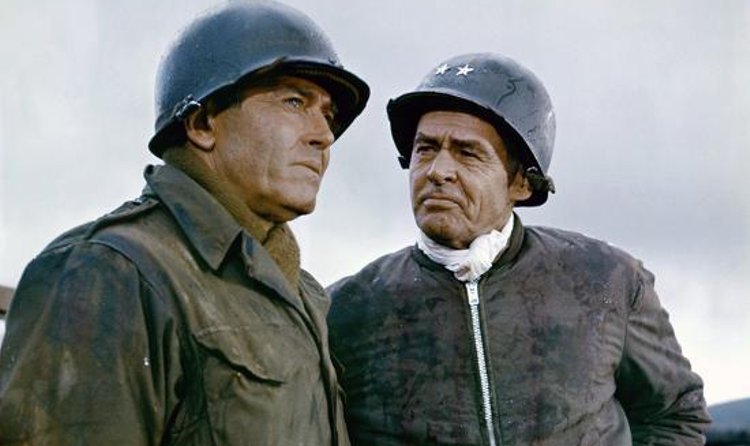
In 1965, director Ken Annakin’s large-scale war film ‘Battle of the Bulge’ hit the screens. Despite its star-studded cast, including Henry Fonda and Robert Shaw, and its spectacular tank battles, the film provoked an unexpectedly harsh reaction. Its most prominent critic was not a professional film reviewer, but the 34th President of the United States — Dwight D. Eisenhower.
Why did the former Supreme Allied Commander in Europe tear the film apart?
Hollywood vs. Reality
The film’s plot revolves around the last major counteroffensive by the Wehrmacht in the Belgian Ardennes in December 1944. Lieutenant Colonel Kiley (Henry Fonda) tries to warn command about the impending attack, while German Colonel Hessler (Robert Shaw) pushes toward Antwerp.
Eisenhower, who personally oversaw Allied operations during that period, was outraged by how Hollywood handled the facts. At a specially convened press conference, he publicly condemned the film for its “glaring historical inaccuracies.”

The real battle took place in snow-covered forests with poor visibility, whereas in the film, combat often unfolds in open landscapes resembling the arid plains of Spain (where it was actually shot). The movie used M60 Patton tanks to portray German Tigers, which looked absurd to a professional military man. Key military leaders of the time are also largely absent from the narrative.
Personal Offense or Conflict of Interest?
However, the president’s anger may have had a more down-to-earth explanation. It turned out that Eisenhower was simultaneously supporting a competing film project by Columbia Pictures.
That film was to be titled December 16: Battle of the Bulge. The screenplay was written by the president’s son, and Michael Anderson was set to direct. To avoid confusion with the Warner Bros. project, the creators of Battle of the Bulge deliberately changed character names and distanced themselves from real-life figures. In the end, the Eisenhower family’s project was never realized, and Annakin’s version remained the only major Hollywood take on the subject at the time.
Yuri Ozerov’s Response
Battle of the Bulge (like the earlier The Longest Day) offended not only the American president but also Soviet filmmakers. These films largely ignored the USSR’s role in the defeat of Nazi Germany.
It was precisely this omission of the Soviet contribution in Western cinema that prompted director Yuri Ozerov to create the monumental film epic Liberation (1968–1971).
Ozerov set out to depict the full масштаб of the war in all its scope. Following the success of Liberation, he went on to create several more large-scale films about World War II, effectively forming a Soviet “cinematic response” to the Western interpretation of history.