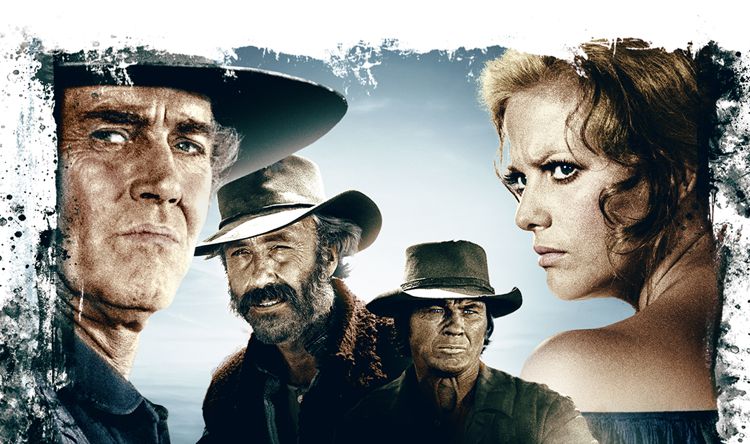
‘Once Upon a Time in the West’ (1968) has long secured its place in the pantheon of the greatest Westerns, yet its behind-the-scenes story is no less compelling than what unfolds on screen. Beneath its monumental imagery, meditative pacing, and hypnotic score lay tension, creative conflicts, and unexpected human vulnerabilities.
At the heart of the film is Ennio Morricone’s music — not merely an accompaniment, but a full-fledged participant in the narrative. The uniqueness of his approach lay in the fact that key themes were composed before filming began and played directly on set. The actors literally “moved within the music,” aligning the rhythm of their gestures and glances with the score. This gave the scenes an almost uncanny expressiveness — especially the moment when Claudia Cardinale’s character discovers the aftermath of the brutal massacre of her husband’s family.
At the center of the story are two lives shattered by a single man. The mysterious Harmonica, portrayed by Charles Bronson, and Jill, a former prostitute played by Cardinale, are united in their desire for revenge against Frank — a cold-blooded killer embodied by Henry Fonda. Their confrontation unfolds against the backdrop of advancing civilization — the railroad, which becomes a symbol of inevitable change. Only in the finale is the true motive for revenge revealed, making for one of the film’s most piercing moments.
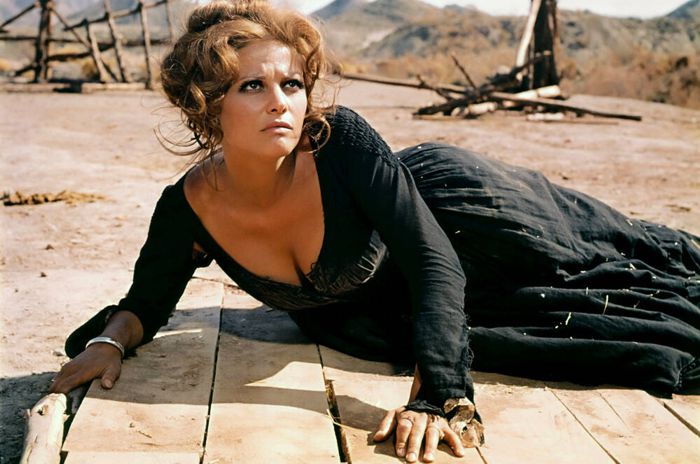
Claudia Cardinale
However, beyond the frame, the dynamics were entirely different. On paper, the pairing of Charles Bronson and the magnificent Claudia Cardinale promised to be electrifying. In reality, it was cold. Bronson, the embodiment of the silent avenger, was just as withdrawn off-screen. According to Cardinale, he barely spoke to anyone: after finishing a scene, he would step aside and silently play with a ball. Their on-screen chemistry — intended to be tense and magnetic — never truly materialized in real life.
The situation with Henry Fonda was no less complicated. Despite his professionalism, filming love scenes was marked by awkwardness — not least because of the presence of his wife, Shirley Adams, who watched the process with visible displeasure.
Cardinale later emphasized that she never aimed to provoke: “Other directors had already asked me to undress, but they failed. I hate selling my body; mystery must be preserved… In Once Upon a Time in the West, when Henry Fonda makes love to me, I don’t undress completely. And yet, it’s still sensual, isn’t it?”
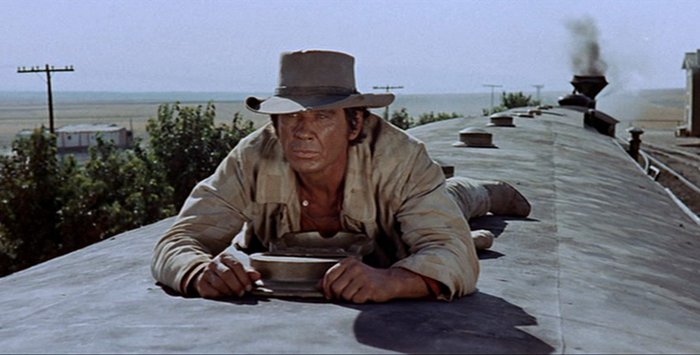
Charles Bronson
A separate drama unfolded in the relationship between Sergio Leone and Clint Eastwood. Leone had a deep love for symbolism. He originally planned for the opening scene at the train station to feature characters from his previous hit The Good, the Bad and the Ugly.
Lee Van Cleef and Eli Wallach agreed, but Clint Eastwood refused outright — he had no desire to die in the film’s opening minutes. This refusal sparked a twenty-year rift. The director and his favored actor stopped speaking, and only shortly before Leone’s death did they reconcile during a chance meeting at the premiere of Eastwood’s Bird (1988).
Even the creation of the music was not without incident. According to legend, in pursuit of the perfect sound for the film’s finale, Leone nearly “strangled” harmonica player Franco De Gemini — an episode that only underscores his obsessive dedication to the result.
Read more: Clint Eastwood’s Daughter, Who He Discovered on a Film Set
In the end, Once Upon a Time in the West became more than just a film — it became an epic: slow, majestic, and merciless. And perhaps it was precisely the tension behind the scenes that helped create the very atmosphere that continues to captivate audiences around the world.