Alexei Balabanov’s filmography includes both cult, widely beloved hits and bold festival experiments. However, not all of his creative ideas ever made it to the screen: a considerable number of projects remained unrealized. Among them were a film adaptation of a novel by Knut Hamsun, a biographical story about a young Joseph Stalin, and perhaps the most unusual of Balabanov’s unmade films — ‘The American’.
A Project Conceived as “Brother 3”
The American was envisioned as a stylistic continuation of the Brother duology. At the center of the story was a U.S. investor who lost a large sum of money after the bankruptcy of a Norilsk-based company. His attempt to understand what happened brings him to Russia, where the character gradually hits rock bottom: he encounters criminal groups, loses his home, and struggles with alcoholism. His return to a normal life was to be guided by a character played by Alexei Chadov, who introduces the American to a woman and hides them from criminals in a settlement of Siberia’s Indigenous peoples.
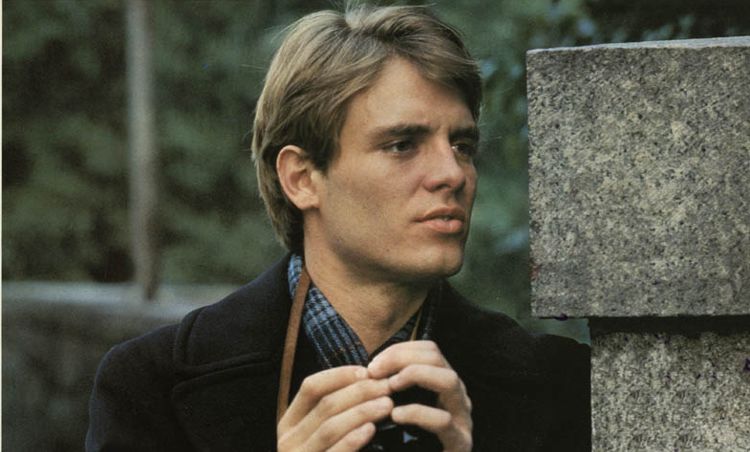
The lead role was given to Hollywood actor Michael Biehn, known for his work in James Cameron’s films The Terminator and Aliens. The first scenes were successfully shot in New York, after which the crew traveled to Norilsk.
Shock of the Northern Reality
Upon arrival, Biehn was confronted with the harsh realities of the Arctic: polar night, subzero temperatures approaching forty degrees, and gale-force winds left a heavy impression on him. Even the best hotel room failed to improve his attitude toward the conditions. The atmosphere felt like a horror-movie set — empty corridors, silence, and a sense of isolation.
The actor began drinking almost immediately. On his very first night he emptied the minibar, and in the days that followed he drank almost constantly while Balabanov focused on shooting cityscapes and transitional scenes.
First Alarming Signs
A few days later, the first full-scale scene was scheduled — a bar episode featuring the band Leningrad. According to the script, the musicians hire the down-and-out characters played by Biehn and Chadov to carry equipment. The extras were given real vodka, and while waiting for Sergey Shnurov, the American actor joined in the drinking. When the musician finally arrived an hour late, Biehn’s mood soured dramatically. The scene, on which great hopes had been pinned, fell apart: the actors’ chemistry simply did not work.
At the same time, Shnurov himself became embroiled in a scandal, having been detained for a drunken disturbance — an incident that only heightened the sense of chaos surrounding the production.
Escalation of the Crisis
After finishing work in Norilsk, the crew flew to Irkutsk. The flight on an old propeller-driven aircraft intensified Biehn’s fears and irritation, and he began drinking again. In Irkutsk, the team managed to film Leningrad’s concert, but the following day the actor caused a scandal in the hotel restaurant, appearing in a bathrobe and demanding alcohol. His condition deteriorated to such an extent that he was sent to a clinic.
By that point, it became clear that continuing the project was impossible. The producers decided to shut it down. Biehn claimed he was on the verge of a nervous breakdown, while Balabanov, witnessing his state, was forced to admit his own helplessness in the situation.
Irony of Reality
The production story unexpectedly mirrored the film’s plot: a Hollywood hero, confronted with the Russian hinterland, gradually sank into a state eerily similar to that of his character. The project began to acquire an almost mystical symbolism, as if the screenplay had foretold its own collapse. The producers attempted to find a replacement — Woody Harrelson was among the names considered — but no suitable candidate was found, and filming was ultimately abandoned.
Balabanov later traveled to the United States, where legal proceedings with Michael Biehn took place. Several years later, the actor was required to pay compensation for derailing the project. In 2013, the director spoke of wanting to rewrite the script for Mike Tyson, but the idea remained unrealized: that same year, Alexei Balabanov passed away.