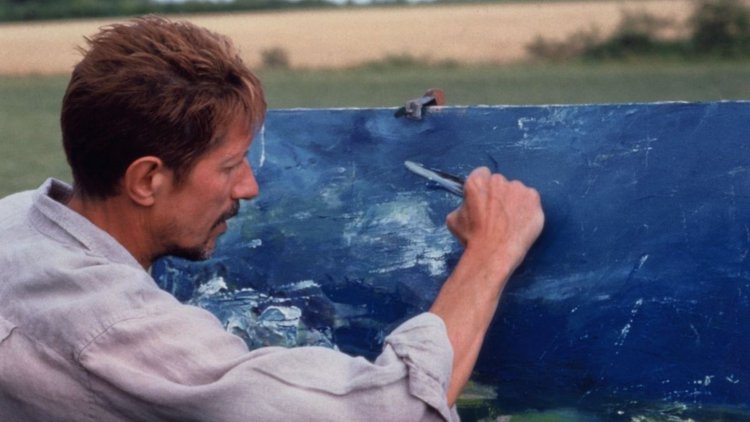
When we watch biographical films about great artists, we are often mesmerized by the magic of the frame: a master’s hand confidently applies a brushstroke, and a masterpiece comes to life on the canvas. But in Maurice Pialat’s 1991 film ‘Van Gogh,’ there is a story behind that magic worthy of a screenplay of its own.
The film was a triumph: it was selected for the official competition at the Cannes Film Festival and received 12 César Award nominations. Yet the main surprise for audiences lay not in the plot, but in the execution. The leading role was played by Jacques Dutronc — a renowned French singer, composer, and guitarist. His performance was so powerful and deeply moving that he left little chance for his competitors, deservedly winning the César for Best Actor.
Read more: John Lennon as Gollum: The Transformation We Never Saw
However, despite his talent, Dutronc did not possess the painting skills of the great Dutch master. The art of painting requires decades of training — something the actor simply did not have amid a demanding filming schedule. So, who “stood in” for him in those moments when a hand holding a palette knife or brush appeared on screen?
The answer lies in the biography of the director himself. Maurice Pialat, who passed away in 2003, did not initially plan to devote his life to cinema. His first and greatest passion was painting. He first tried his hand at architecture. During World War II, he studied at the School of Decorative Arts in Paris, and after the war his works were exhibited in prestigious salons for young artists. Pialat experimented across genres: he painted still lifes, portraits, nudes, and even explored abstraction.
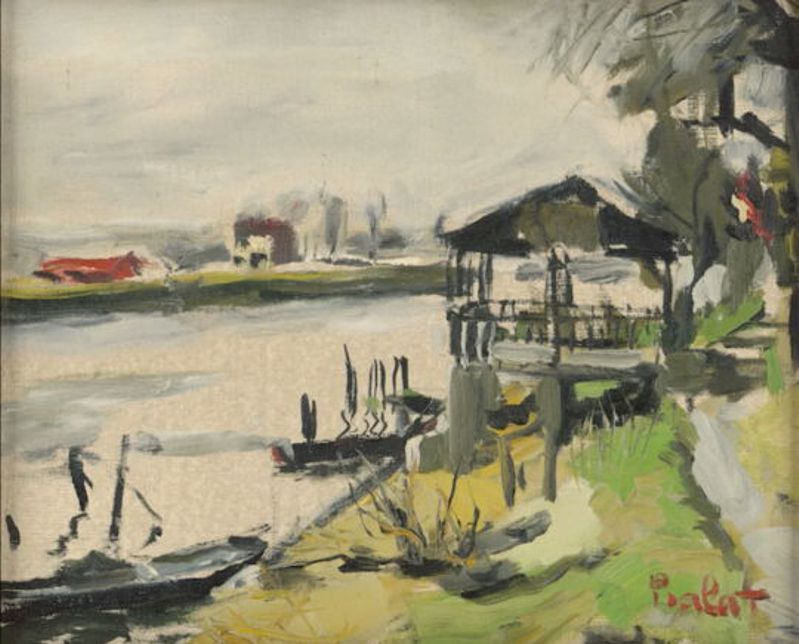
For many years, the director claimed that his early works had been irretrievably lost. “Everything disappeared,” he would say when asked. But this was not true. In reality, Pialat carefully preserved his paintings in the basement of his home. Thus, to truly discover Maurice Pialat as an artist, one need only watch Van Gogh, which has been described as “a kind of self-portrait” and “a magnificent film,” according to a former director of the French Cinémathèque.
In this way, Maurice Pialat himself became the “ghost” of Van Gogh in his own film. The paintings and the confident movements we see on screen belong to a man who once dreamed of standing at an easel rather than behind a camera.
Read more: Why Did Antonio Banderas Change His Mind About Playing Gianni Versace?
Watching this film today is not just about discovering the story of Vincent’s final months in 1890. It is also a rare opportunity to witness Pialat’s own “hidden exhibition.” According to experts at the French Cinémathèque — where his works were later displayed — the film stands as the director’s most sincere declaration of love for the art he never truly abandoned.