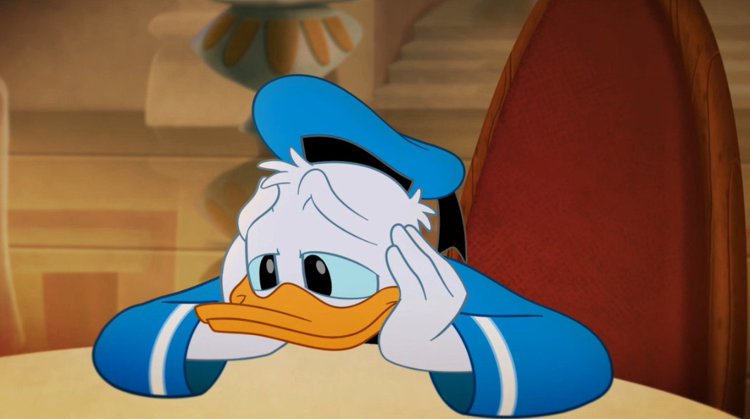
The Golden Age of comics, which began with Superman’s triumphant rise, turned illustrated stories into a true goldmine. Film studios competed to create new adventures for their animated stars, and Disney was no exception. Their success was phenomenal: for a time, ‘Walt Disney’s Comics and Stories’ held the title of the best-selling publication in the world.
Yet behind this triumph stood a man whose name long remained in the shadow of the corporate brand — “the good artist” Carl Barks. Barks didn’t just draw ducks; he built an entire universe. It was he who settled Donald in Duckburg, sent him to the lost cities of the Andes where chickens lay square eggs, and gave us such legends as Scrooge McDuck and Gyro Gearloose.
What made Barks unique was that even the most absurd situations in his stories had a solid foundation. He loved finding logical, almost scientific solutions to his characters’ problems. And one day, this passion for engineering plausibility led to one of the most curious legal precedents in the history of patent law.
Krøyer’s Invention and a “Hello” from 1946
In 1964, an emergency occurred in Kuwait’s harbor: the cargo ship Al-Kuwait sank. The situation was critical. Thousands of live sheep were on board, and the decomposing cargo threatened to contaminate the region’s drinking water. There was no time to install heavy cranes. Help came from Danish inventor Karl Krøyer. He proposed an elegant and unconventional solution: to pump millions of small expanded polystyrene balls into the ship’s hull. Thanks to their buoyancy, the balls would displace the water and literally push the vessel back to the surface.
The method worked brilliantly. The ship was raised, an environmental disaster was averted, and Krøyer proceeded to register a patent for his unique invention in Denmark, the United Kingdom, and the Netherlands. However, when attempting to secure the patent, he encountered an unexpected obstacle. Dutch patent attorneys — apparently possessing both a sharp sense of humor and broad cultural knowledge — rejected his application. The reason? Lack of novelty.
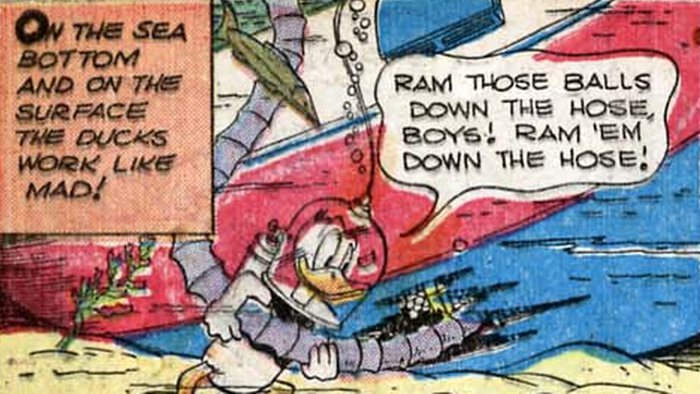
It turned out that as early as 1949 (based on a 1946 story), Carl Barks had published a comic titled The Sunken Yacht. In that story, Donald Duck tries to raise Uncle Scrooge’s yacht from the seabed. To do it quickly and cheaply, Donald and his nephews pump thousands of… ping-pong balls into the hull through a hose. The court ruled that Krøyer’s idea was not original, as the method of raising a vessel using lightweight spherical objects had already been described and visualized in popular culture nearly twenty years earlier.
This story became a classic example of how art can anticipate science. Carl Barks, striving to make Donald’s adventures believable, inadvertently deprived a real inventor of intellectual property rights. Today, this case reminds us that inspiration can come from anywhere — even from the pages of a children’s comic — and that Donald Duck is not just a perpetually grumpy duck, but a true engineering genius ahead of his time.
Read more: Why the Actress Who Voiced Snow White Was Blacklisted by Disney