
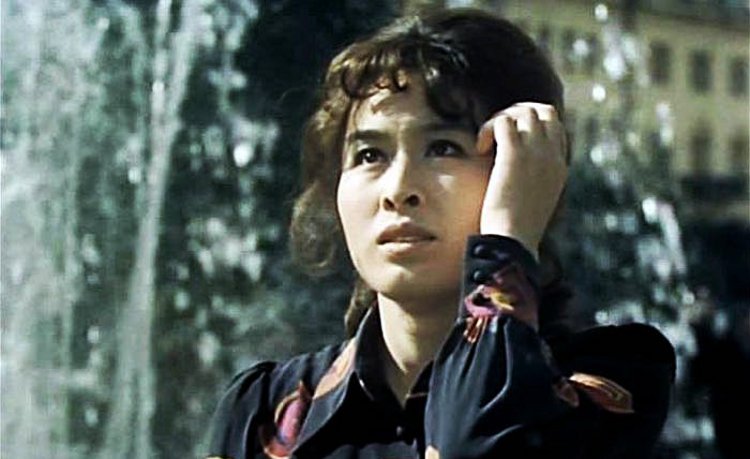
In the history of Soviet cinema, the appearance of foreign stars was always an event, but Komaki Kurihara’s case was truly special. She was not merely an “exotic star” in the frame — she became a genuine legend, the most recognizable Japanese woman for millions of viewers across the USSR. Starting in 1967, the actress appeared in more than thirty films, becoming one of the most sought-after stars of Japanese cinema in her time.
Kurihara’s path to Soviet films began with her love for Russian culture. While still in Japan, she trained professionally in ballet, admired Yuri Gagarin, and dreamed of performing on a Moscow stage. So, when director Alexander Mitta offered her the leading role in Moscow, My Love, she accepted without hesitation.
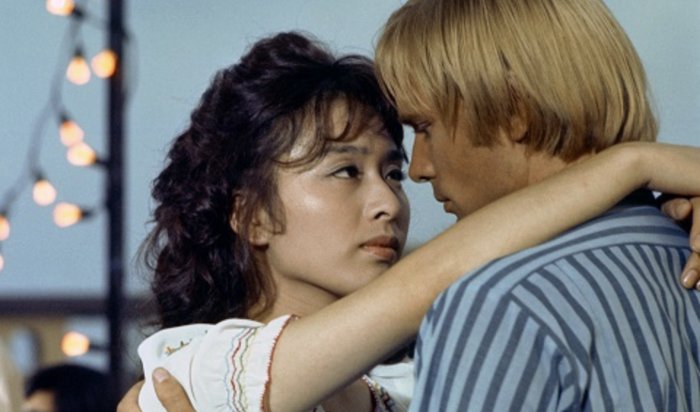
Moscow, My Love
The screenplay by Edward Radzinsky told a touching and tragic love story between a Japanese dancer from Hiroshima and a Moscow sculptor (played by Oleg Vidov). For Kurihara, the project was a dream come true: she diligently studied Russian for the role and was given the unique opportunity to dance on the stage of the Bolshoi Theatre. The film achieved tremendous success in both countries, making the actress incredibly fashionable and popular.
Two years after her high-profile debut, Kurihara returned to Soviet audiences in a very different role. Director Sergei Solovyov wrote the screenplay for Melodies of a White Night specifically for her. Originally titled Music Lessons, the film received its poetic final name thanks to its Japanese partners.
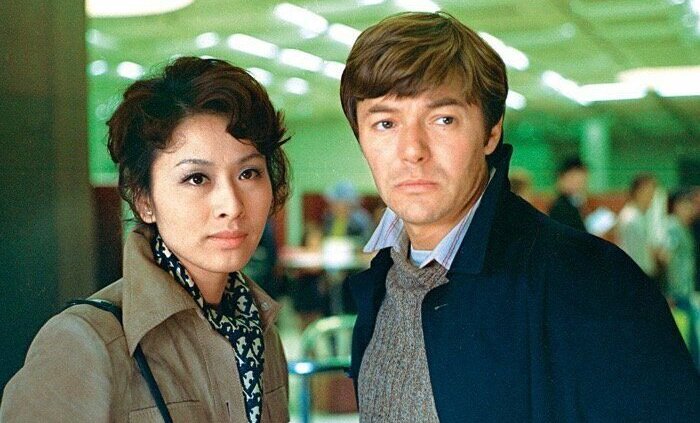
Melodies of a White Night
In this slow-paced and delicate melodrama, Kurihara portrayed the pianist Yuko. Her on-screen duet with Yuri Solomin became a model of restrained, intellectual tenderness. The film’s atmosphere was enriched by the magical music of Isaac Schwartz, which continues to captivate listeners with its depth even decades later.
Her creative collaboration with Alexander Mitta was not limited to Moscow, My Love. Years later, the actress reunited with the director for the Soviet-Japanese drama Step, where she delivered a deeply dramatic performance. In the legendary disaster film Crew, viewers could also spot Kurihara in a small but intense episode, where she appeared as a passenger named Kumiko, caught among hostages on a hijacked plane.
Read more: Roger Vadim: A Pygmalion with Russian Roots Who Created the Idols of French Cinema
Speaking about her experience in the USSR, Komaki Kurihara often emphasized that this work meant far more to her than just another contract. She recalled the atmosphere on the sets of Mitta and Solovyov as being filled with a special warmth: “I truly enjoyed working with my Russian colleagues. The atmosphere itself helped — we were searching together for a deep inner understanding of our characters, and that unity was invaluable.”
Her professional reputation was so high that Kurihara was twice invited to serve on the jury of the prestigious Moscow International Film Festival. In 1975 and 1981, she participated in the 9th and 12th editions, helping to decide the fate of the festival’s top awards alongside world-renowned masters.
Komaki Kurihara remains in the memory of generations not simply as an “exotic star,” but as a symbol of refinement and a bridge between two very different cultures. Her presence on screen always brought a special Eastern mystery and sincere warmth to Soviet cinema — something that can still be felt through the flicker of old film reels today.
Read more: How an American Actor Derailed the Filming of an Alexei Balabanov Movie