

The story of Roger Vadim is more than just the biography of a film director — it is the chronicle of how one man managed to change the aesthetics of an entire era. On January 26, 1928, a son was born into the family of Russian émigré Igor Nikolaevich Plemyannikov, a child who would later become a cult figure of the French New Wave.
His childhood, spent accompanying his father on diplomatic postings in Turkey and Egypt, shaped his cosmopolitan outlook on the world. After his father’s death, his mother, the French actress Maria-Antoinette Ardilouze, brought him back to Paris. There, the young Vadim searched for his path: he wrote novels, performed in the theater, and even tried his hand in the academic environment of the Institute of Political Studies. But the call of cinema proved stronger than formulas.
Roger Vadim and Brigitte Bardot
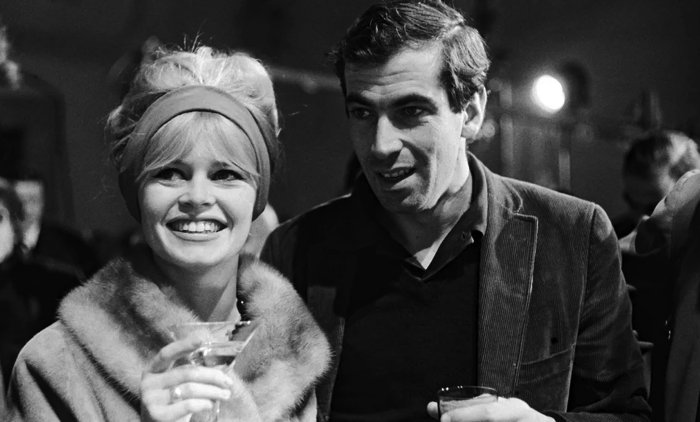
Vadim’s directorial debut was not merely a premiere — it was a social explosion. The film And God Created Woman turned his wife, the young Brigitte Bardot, into a global icon. Vadim possessed a rare gift: he knew how to transform a woman’s natural erotic appeal into something the entire world would dream about.
The path to this success, however, was dramatic. Bardot’s parents, who had hoped to marry their daughter off to a banker or an influential politician, were furious about her choice. “I am Madame Plemyannikov,” the sixteen-year-old Brigitte proudly declared, defending her love for the aspiring director. For his sake, she even made her first suicide attempt, after which her family was forced to yield, waiting only until she reached adulthood.
Read more: How Soviet Actress Larisa Vadko Ended Up in a French Prison
The film provoked a colossal scandal. While audiences in Europe adored it, in the United States a “society of virtuous Catholics” picketed theaters, accusing the movie of vulgarity and immorality. Court cases against distributors only fueled the fire, as the foundations of the patriarchal world began to crack under the pressure of a new cinematic sensibility.
Ironically, the very fame brought by the film destroyed Vadim and Bardot’s marriage. During another shoot, Brigitte fell in love with someone else. They lived together for five years and eventually parted as friends — later she would call him her “blood brother,” the man who understood her better than anyone else.
Roger Vadim and Annette Stroyberg
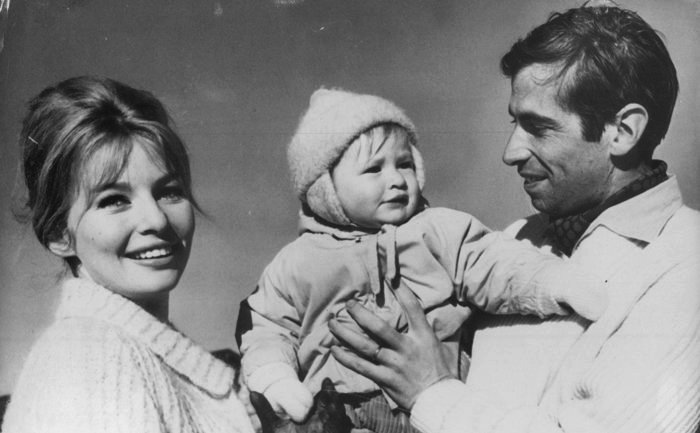
Vadim soon earned the nickname “the Pygmalion of female stars.” Each new beloved woman became another attempt to create perfection. The Danish model Annette Stroyberg burst into his life dramatically — she sold her last dress to buy him a gift. Vadim married her, and the couple had a daughter, Nathalie. Stroyberg appeared in a couple of his films but never became a great actress, largely because she lacked the desire to refine her craft. Their marriage gradually began to crumble — and soon a new muse appeared in the director’s life.
Roger Vadim and Catherine Deneuve
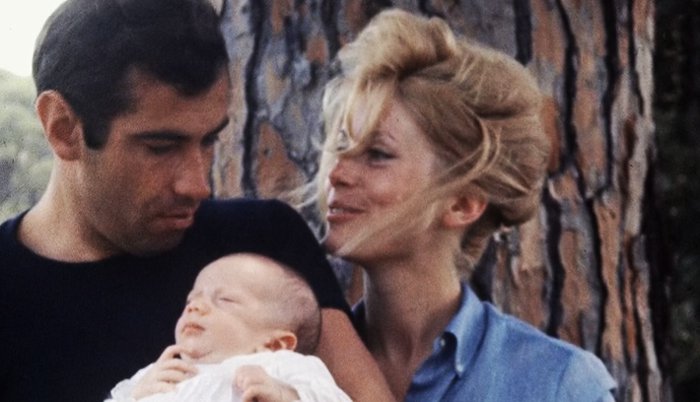
At one party, Vadim noticed the seventeen-year-old Catherine Deneuve, then still known by her real name, Catherine Dorléac. From that moment on, he could think of no one else. Soon the world would know her by the name Catherine Deneuve. They lived together for eight years. Catherine raised his daughter from Stroyberg and gave birth to his son Christian.
Yet the couple never officially married. Stroyberg threatened to take their daughter away if Vadim remarried, and the director avoided provoking a legal battle. Even after their painful separation, Deneuve would later call Vadim “the most faithful man” in her life.
Roger Vadim and Jane Fonda
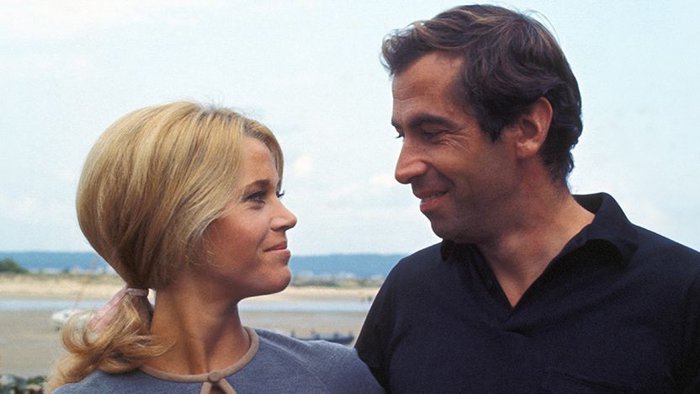
The next chapter was the American actress Jane Fonda. In this relationship Vadim managed to avoid the legal traps set by his former wife, and the couple officially married. His films helped cement Fonda’s status as an international star. Their marriage lasted eight years and, according to the director’s daughter Nathalie, Fonda was the greatest love of his life. Nevertheless, this story also ended in separation soon after the birth of their daughter Vanessa.
In 1986 Vadim published his memoirs titled Bardot, Deneuve, Fonda: My Life with the Three Most Beautiful Women in the World. However, Bardot and Deneuve sued him for invasion of privacy. The controversy centered on candid details — from billiards played while undressing to descriptions of Bardot’s “perfect backside.” The actresses’ main accusation was that the director had portrayed them as weak and troubled. In the end, Vadim paid each of them $10,000 in compensation.
A Finale Without Enmity
After Fonda, Vadim married twice more. Yet the most remarkable fact is something else: despite passionate romances and painful separations, he managed to remain on friendly terms with all the women in his life. When the director died in 2000, they stood together at his funeral.
Bardot. Deneuve. Fonda… These names became part not only of his biography but also of the history of European cinema. The descendant of a Russian émigré changed French filmmaking — not only through his films, but through the women he brought to the forefront of an era.