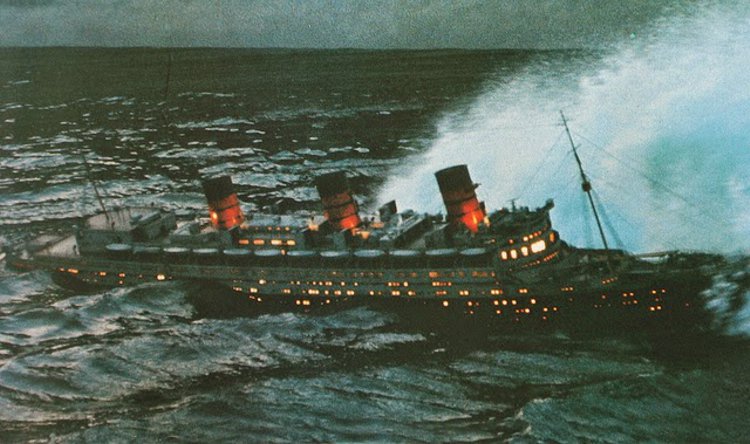
Long before James Cameron made the world mourn for ‘Titanic’, Hollywood was already shaken by another maritime disaster. In 1972, the blockbuster ‘The Poseidon Adventure’ hit theaters, laying the foundation for the modern disaster movie genre. It told the story of a luxurious ocean liner that, during a New Year’s celebration, is struck by the fury of the sea and flipped upside down, turning the path to survival into a deadly vertical labyrinth.
The story unfolds aboard the majestic Poseidon, traveling from New York to Greece. Despite warnings about an earthquake near Crete, Captain Harrison — played by Leslie Nielsen — is forced to obey the cruise company’s orders and continue the voyage. The festive night soon turns into a nightmare when a gigantic killer wave crashes into the ship, capsizing it.
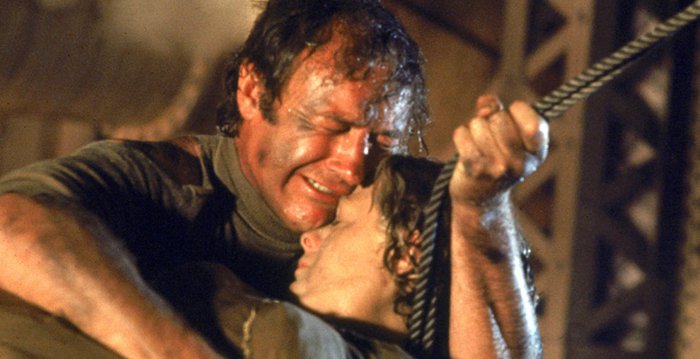
At the center of the story is Reverend Scott, portrayed by Gene Hackman. His character convinces a small group of survivors that their only hope lies in climbing toward the bottom of the ship, which has now become its “roof.” Audiences watched in suspense as the desperate survivors scaled a massive Christmas tree and struggled through the overturned vessel before the rising water consumed everything in its path.
The Real Roots of the Tragedy
Many viewers wondered how much of the story was based on reality. The answer can be found in the life of novelist Paul Gallico, author of the original book. In 1937, Gallico traveled aboard the British ocean liner Queen Mary. During breakfast, the ship was struck by an abnormal wave — nicknamed a “bomb wave” — so powerful that passengers and furniture were thrown across the dining hall.
A similar incident happened to the Queen Mary again during World War II, when the liner was transporting troops. On that occasion, a massive wave struck the ship head-on. Fortunately, the vessel survived and drifted in the North Atlantic until rescuers arrived. The terrifying experience remained etched in Gallico’s memory and later inspired his bestselling novel.
A Revolution in Special Effects
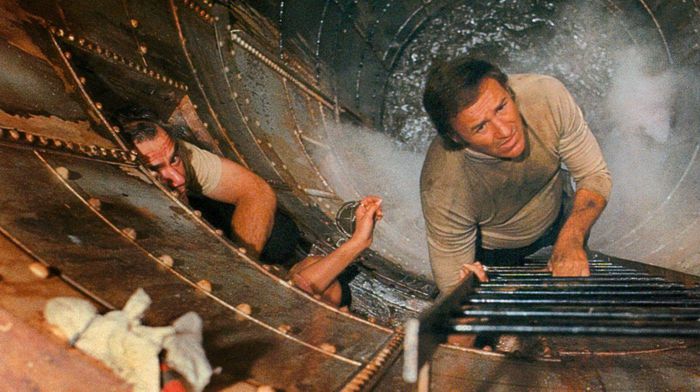
Director Ronald Neame approached the production on an extraordinary scale for its time. The opening scenes were filmed aboard the legendary Queen Mary itself. Inside studio soundstages, the crew constructed an elaborate hydraulic system that allowed entire sets to tilt at a 45-degree angle. The actors performed most of the stunts themselves and later admitted that filming inside constantly flooded and inverted sets was physically exhausting.
The movie won an Academy Award for Best Original Song, along with a special award for its visual effects, which remain impressively convincing even more than fifty years later.
Read more: The Secrets of the Erotic Thriller ՛Deep Water՛: A True Story or Pure Fiction?
The film’s success was enormous, inspiring a wave of imitators and sequels. In 1979, the follow-up Beyond the Poseidon Adventure was released, followed by a 2005 television adaptation and Wolfgang Petersen’s large-scale remake Poseidon in 2006.